

Tired of tiptoeing through your own house like it’s a minefield?
You don’t need a contractor, most squeaks are fixable in minutes with simple tools.
Start by walking the floor and marking the noisy spots.
That single move is your whole diagnosis.
This guide shows quick tests and three cheap fixes.
Powder for friction, tightening or setting loose fasteners, and a simple screw or shim trick for under-floor gaps.
You’ll get step-by-step instructions, a shopping list you can grab in one run, and what to watch for so you don’t overdo it.
Fast Ways to Silence Squeaky Floors Using Simple DIY Fixes
Walk slowly across your floor and put weight on the loud spots. That’s your whole diagnosis. Step normally, then shift your weight heel to toe over each noisy area. The squeak happens at the exact moment the board moves, so pause and mark that spot with masking tape or chalk. If you’ve got a helper nearby, stand on the squeak while they listen from another angle or press down next to you. When the noise only happens under your foot, you’ve found it.
Most squeaks come from two simple problems. Either two boards are rubbing against each other as they flex, or one board’s slightly loose and shifting against its fasteners. You’ll feel the difference. Friction squeaks happen when you rock your weight side to side. Loose board squeaks happen when you step down and lift up. Both sound annoying, but they don’t always mean something’s broken. Wood moves with the seasons. Older floors settle over time.
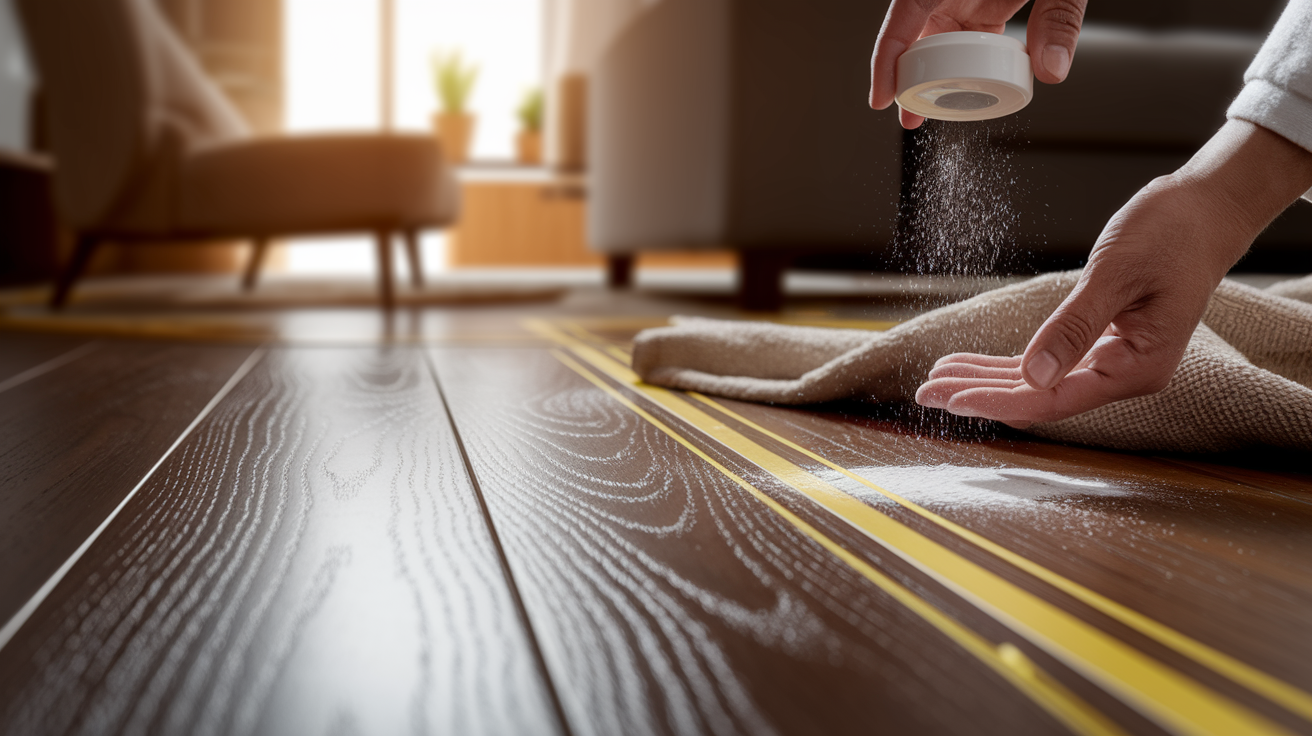
For instant relief, grab talcum powder or powdered graphite from any hardware aisle. Sprinkle the powder into the seams around the squeak, lay a towel over the spot, and walk on it a few times to work the powder down into the cracks. This reduces friction and quiets the noise for weeks or even months. Think of it like dry lubricant that lets the boards slide quietly past each other. If you spot a loose board with a proud nail or screw, try tightening it with a screwdriver or tapping the nail flush with a hammer and nail set. These fixes cost under five dollars and take ten minutes.
Most common causes of squeaky wooden floors:
- Loose boards that shift slightly when stepped on
- Seasonal wood movement from humidity swings (wood shrinks in winter, swells in summer)
- Gaps between the subfloor and the joists underneath
- Not enough fastening during original installation, or fasteners that failed over time
- High or low indoor humidity causing boards to expand or contract
- Aged flooring where original adhesive or nails have loosened over the years
Final Words
Start with the simple walk test and a quick helper to pin down where the noise comes from. You’ll find most squeaks fast without any special tools.
Next, listen for board-to-board friction or a loose board shifting against fasteners. That tells you which quick fix to try.
Try talcum powder or powdered graphite between boards, and tighten any reachable screws or nails. These are the kind of fast, low-effort steps that show you how to fix squeaky wooden floors and get your place feeling solid again.
FAQ
Q: How do I make my hardwood floors stop squeaking?
A: To make your hardwood floors stop squeaking, locate the noise with a walk test and helper, sprinkle talcum or graphite between boards, and tighten any accessible loose screws or nails.
Q: Does WD-40 work on squeaky wood?
A: WD-40 on squeaky wood can reduce noise short-term, but WD-40 is oil-based, attracts dirt, and can harm finishes; use powdered graphite, talcum powder, or a dry silicone spray instead.
Q: Why do my floors squeak when I walk on them?
A: Floors squeak when you walk on them because boards rub together, nails or screws are loose, or the subfloor shifts against joists, often worsened by seasonal humidity changes.
Q: Can squeaky floors be fixed from underneath?
A: Squeaky floors can often be fixed from underneath by driving screws through the subfloor into joists or adding blocking, as long as you have crawlspace or basement access, otherwise call a pro.