

Think a pocket knife can handle every cutting job? Think again.
A utility knife is the go-to tool for repetitive, rough, or precise cuts at home and on the job.
Its thin, replaceable blades stay sharp so you can finish jobs faster without stopping to sharpen.
This post shows everyday tasks a utility knife excels at: opening boxes, scoring drywall, trimming carpet, stripping cable, and scraping old caulk.
You’ll also get simple safety tips, blade choices, and quick tricks that save time and stop do-overs.
Core Functions and Everyday Uses of a Utility Knife

A utility knife is a handheld cutting tool with a replaceable razor blade that’s built for manual labor and repetitive cuts. You don’t sharpen it like a pocket knife. You just swap out the blade when it dulls. The thin, sharp blade sits in a lightweight frame that folds or retracts when you’re not using it. Most models lock the blade in place during cuts and include a pocket clip so you can grab it fast.
This design makes it a genuine multi-purpose cutting tool that moves between home projects, workplace tasks, and construction sites without missing a beat. The replaceable blade system keeps your cuts clean and consistent. No stopping to sharpen. Whether you’re working in a garage, unpacking shipments in a warehouse, or trimming materials on a job site, the utility knife handles repetitive cuts that would trash a traditional blade in minutes.
Common everyday tasks include:
Opening boxes and cutting through packaging tape, breaking down cardboard for recycling, cutting plastic straps and shrink wrap, trimming carpet and vinyl flooring, scoring and cutting drywall or gypsum board, cutting electrical cords and cables to length, scraping old paint or caulk or adhesive residue, slicing through foam insulation and sheet materials.
The utility knife beats a pocket knife for abrasive or high volume cutting because you’re not fighting a dull edge halfway through the job. When the blade loses its bite, you slide in a fresh one and keep moving. That’s why contractors, warehouse workers, and DIYers who tackle frequent cutting tasks keep a utility knife within arm’s reach.
Utility Knife Construction, Blade Types, and How They Affect Use
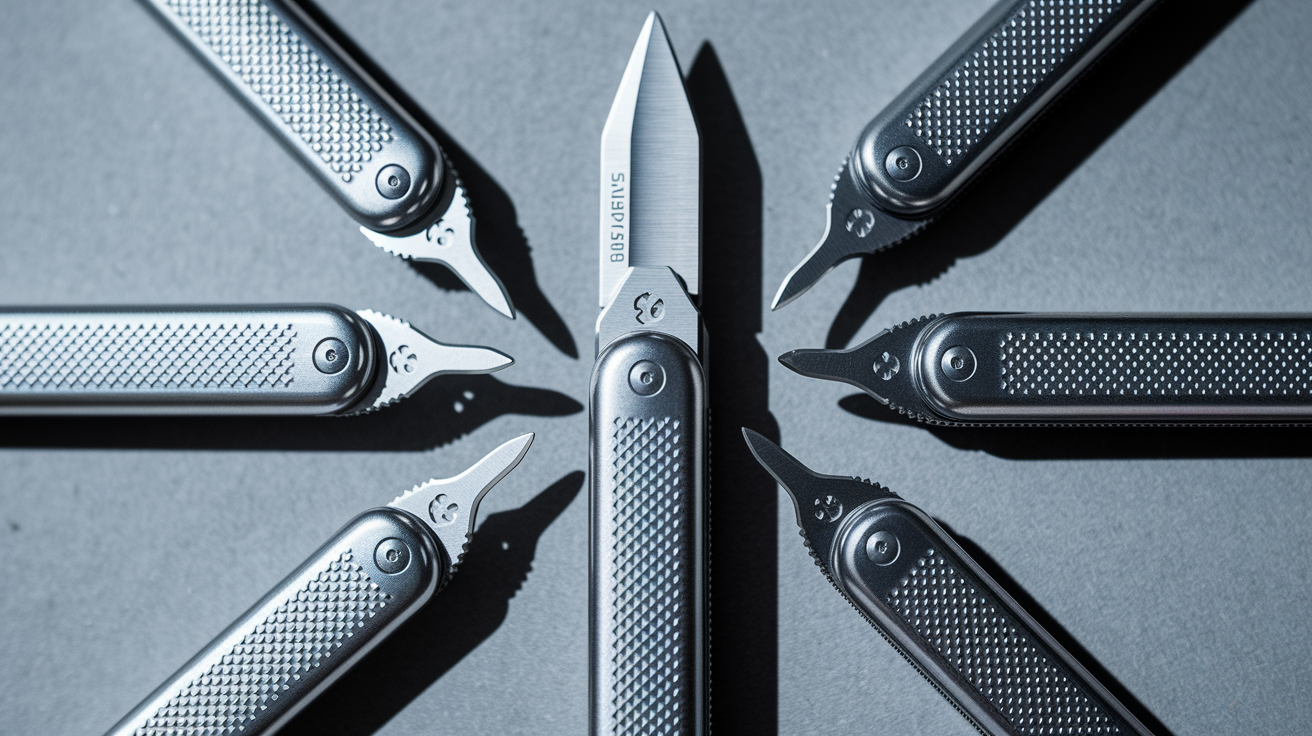
Most utility knives feature a retractable or folding blade housed in a durable frame. Stainless steel, aluminum, or reinforced plastic. The blade locks in place with a slider, thumb stud, or screw so it won’t slip during a cut. Ergonomic handles with textured grips help you keep control even when your hands are sweaty or you’re wearing gloves. Many models include a pocket clip or lanyard hole so the tool stays accessible without taking up space in your bag.
Blade type changes how the knife cuts and what materials it handles best. Straight blades work for general purpose cutting. Boxes, plastic, thin wood, drywall. Hook blades curve at the tip and cut materials like roofing shingles or carpet without damaging the surface underneath. Snap-off blades have scored segments you break away to reveal a fresh edge, keeping the tool sharp across long projects. Serrated blades grab fibrous materials like rope, webbing, and insulation that a smooth edge might slide across.
| Blade Type | Best Use |
|---|---|
| Straight | Cardboard, plastic, drywall, general cutting |
| Hook | Carpet, roofing materials, flooring without underlayer damage |
| Snap-off | Long projects needing continuous sharp edge without blade swap |
| Serrated | Rope, webbing, fibrous insulation, thick strapping |
Material-Specific Cutting Tasks Utility Knives Excel At

The thin profile and sharp edge of a utility knife let you make clean cuts through materials that are either too tough for scissors or too delicate for power tools. You get enough blade rigidity to push through dense materials like vinyl or foam board, but the narrow design also allows precise trimming along edges and tight corners. Because blades are cheap and easy to replace, you can use them on abrasive materials that would ruin a good pocket knife without worrying about the edge.
Utility knives handle these materials with ease:
Cardboard and corrugated packaging, plastic sheeting and film and strapping, rope and twine and paracord, carpet and carpet padding, vinyl flooring and linoleum, drywall and gypsum board, foam board and rigid insulation, fabric and canvas and webbing, leather and synthetic leather, duct tape and adhesive backed materials.
Scoring and controlled depth cuts make utility knives especially useful during remodeling and flooring work. When you’re cutting drywall, you score the paper face with one pass, then snap the board along the line and slice the backing paper. For vinyl flooring or laminate, you score the surface layer without cutting all the way through, then fold and snap for a clean edge. This technique gives you straight, professional looking cuts without the dust and noise of a power saw.
Utility Knife Uses Across DIY, Home Projects, and Professional Trades

At home, a utility knife takes on dozens of small jobs that pop up during routine maintenance and weekend projects. You’ll reach for it when hanging wallpaper to trim excess at the ceiling line, when laying new carpet to cut backing and padding, when building furniture to slice through packaging and cut cardboard templates. It’s the tool that opens paint cans cleanly, trims door sweeps to fit, cuts weatherstripping to length, and scrapes old caulk out of gaps before you apply fresh sealant. Keep one in your junk drawer and another in the garage, and you’ll use both regularly.
Professional tradesmen rely on utility knives across nearly every phase of construction and renovation. Electricians use them to strip wire insulation and open cable bundles. Plumbers score caulk lines around old fixtures and trim foam backer rod. Painters scrape loose paint, cut masking tape, and open sealed buckets. Carpenters shave wood shims, mark cut lines, and trim laminate edging. The tool fits in a tool belt or back pocket, weighs almost nothing, and handles quick tasks without plugging in or changing bits.
Trade-specific tasks include:
Cutting and trimming fiberglass or foam insulation batts, stripping outer jackets from electrical wire, removing old caulk beads and surface sealant, trimming wood or plastic shims flush after installation, scoring drywall for clean snaps during framing, opening material bundles and cutting banding straps, scraping adhesive residue and preparing surfaces for paint, light demolition work like cutting through old drywall or flooring.
In warehouses and distribution centers, utility knives are essential for keeping operations moving. Workers break down hundreds of cardboard boxes every shift, cut shrink wrap off pallets, open product packaging for inspection, and slice through plastic strapping on incoming freight. A dull blade slows the line and creates ragged cuts that waste time, so quick blade changes keep the workflow steady and safe.
Safety, Handling Techniques, and Proper Blade Maintenance for Utility Knives
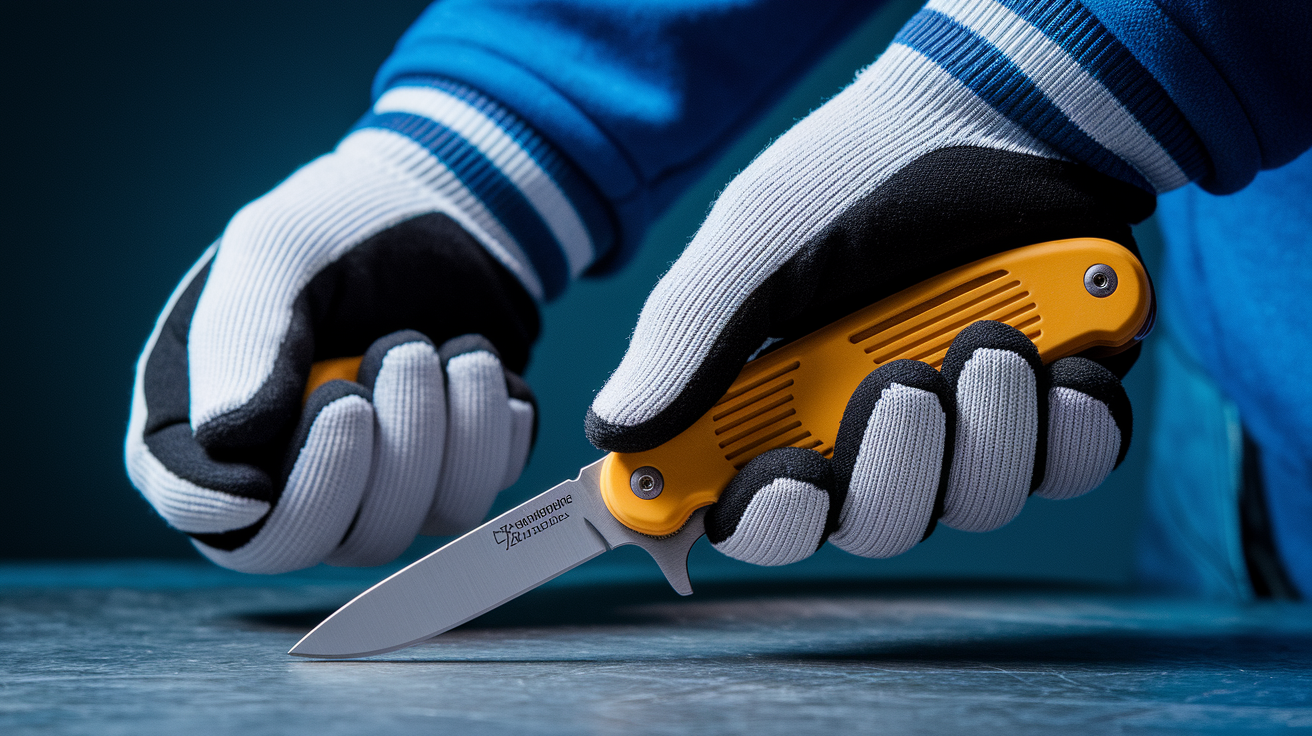
Safe handling starts with a firm grip and the right cutting angle. Hold the knife so your fingers stay behind the blade path. Always cut away from your body and hands. Lock the blade fully before starting a cut so it doesn’t slip back into the handle mid stroke. Use steady, controlled pressure instead of forcing the blade, and let the sharpness do the work. When the cut starts feeling harder or the edge begins to tear instead of slice, it’s time to swap the blade, not push harder.
Steps for safe blade replacement and disposal:
Retract or fold the blade fully and lock the tool closed. Loosen the blade retention mechanism (screw, slider, or release button) according to your model’s design. Carefully remove the dull blade by gripping the non sharp edges or using pliers if needed. Slide the fresh blade into the holder with the cutting edge facing the correct direction, then tighten the retention mechanism until snug. Drop used blades immediately into a blade bank, sharps container, or a sealed metal tin. Never toss them loose in the trash.
Long term maintenance is simple. Store your utility knife in a dry spot, either clipped to your belt or in a toolbox where the blade stays protected. Check the locking mechanism every few months to make sure it still holds the blade firmly without wiggle. If you have a folding model, wipe dust and debris from the pivot area so it opens and closes smoothly. Replace blades as soon as they dull. Fresh blades are safer than dull ones because they require less force and give you better control.
Choosing the Right Utility Knife for Your Projects

Utility knives come in four main designs, and the right choice depends on how often you use the tool and what jobs you tackle. Retractable models with a sliding blade are the most common and the easiest to use. Push the slider forward to extend the blade, pull it back to retract. Folding knives tuck the blade inside the handle like a pocket knife, making them compact and low profile for EDC carry. Fixed blade utility knives hold a single replaceable blade in a simple frame with no moving parts, offering maximum durability on job sites. Multi-tool variants combine a replaceable utility blade with integrated tools like pry bars, screwdrivers, wire strippers, and bottle openers, giving you a complete kit in one pocket sized package.
Focus on a few essential features when comparing models. Durable construction, especially stainless steel or reinforced polymer, means the tool survives drops and rough handling without cracking. Blade compatibility matters. Make sure replacement blades are standard sizes you can buy anywhere, not proprietary types that lock you into one supplier. A sturdy pocket clip keeps the knife accessible without adding bulk, and a quick change blade system lets you swap blades in seconds without fumbling for a screwdriver.
Beginners and occasional users should start with a simple retractable utility knife that uses standard contractor grade blades. You’ll spend less than ten dollars, and the tool will handle most home tasks without extra features to learn. Professionals who cut materials daily benefit from contractor grade models with metal bodies, tool free blade changes, and built in blade storage in the handle. If you work on job sites where you need a driver, pry bar, or wire stripper as often as a knife, a multi-tool variant consolidates your carry and reduces the number of tools rattling in your pouch.
| Model Type | Key Benefit | Ideal User |
|---|---|---|
| Retractable | Simple operation, widely available blades, budget-friendly | Homeowners, occasional DIYers, warehouse workers |
| Folding | Compact profile, pocket-friendly, minimal bulk | EDC users, light-duty tasks, camping and outdoor use |
| Multi-tool | Integrated pry bar, drivers, wire stripper in one tool | Contractors, electricians, tradesmen needing multiple functions |
Final Words
Cutting open boxes, scoring drywall, trimming vinyl, that’s the work this tool handles every day. We covered what it is (a replaceable-blade razor) and how blade types, construction, and handling change the job.
We also ran through material-specific tasks, safety tips like cutting away from you and replacing dull blades, and how to pick the right model for the job.
If you’re asking what is a utility knife used for, use it for repetitive cutting, scoring, trimming, and safe package work around the house and on jobsites. You’ve got the basics, go do the job with confidence.
FAQ
Q: What do you use a utility knife for?
A: A utility knife is used for repetitive cutting tasks like opening packages, breaking down cardboard, trimming flooring, scoring drywall, cutting carpet, and light demolition where replaceable blades keep work sharp and quick.
Q: What is the difference between a kitchen knife and a utility knife?
A: The difference between a kitchen knife and a utility knife is their purpose. Kitchen knives are for food prep, shaped for slicing or chopping. Utility knives use replaceable blades for packaging and construction materials.
Q: Should I get a paring knife or a utility knife?
A: You should choose a paring knife or a utility knife based on tasks. Pick a paring knife for peeling, trimming, and delicate food work. Pick a utility knife for mid‑size slicing and tougher jobs like packages or trimming.
Q: Is a utility knife good for cutting meat?
A: A utility knife is good for cutting meat for trimming and small portions, but not ideal for large butchery. Use a chef or boning knife for big cuts, and always use clean, food‑safe blades.